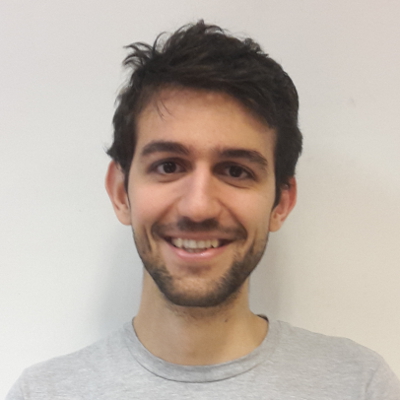
I’m an AI researcher who loves statistics and recurrent networks. For the past few years, I focused on mechanistic interpretability and AI alignment—trying to understand what’s happening inside neural networks and ensuring AI systems do what we actually want.
My work on Automated Circuit Discovery (ACDC) helped establish circuit-based interpretability as a field. The method is now used across major AI labs for understanding how neural networks implement algorithms. I also worked on Causal Scrubbing, a rigorous framework for testing interpretability hypotheses.
Current Work
I’m currently building Dokimasia, tools to help humans realize their values when using computers—shielding against unwanted and false information. The name comes from the ancient Greek practice of scrutinizing candidates for public office.
Background
Before this, I was a Research Scientist at FAR AI, where I led interpretability research and built GPU infrastructure. I mentored researchers through MATS, with three mentees publishing at NeurIPS and five at workshops. Prior to that, I was a Member of Technical Staff at Redwood Research, working on correctness testing for optimizing compilers.
I did my PhD at the University of Cambridge with Carl Rasmussen, studying Bayesian neural networks. My thesis showed that infinitely wide convolutional networks converge to Gaussian processes—the first result of its kind for non-MLP architectures. Before Cambridge, I studied at Oxford (MSc, Distinction) and Pompeu Fabra University in Barcelona (BSc, 1st in class).
Research Interests
- How can we evaluate the accuracy of interpretability explanations?
- How can we find algorithmic explanations at lower labor and compute costs?
- What explains the behavior of agent-like AIs—what do they want?
- Bayesian approaches to neural networks and uncertainty quantification
Other Things
I grew up in Barcelona and did competitive programming in university—our team set the record for problems solved at UPF. In 2017, I won the Malmö Collaborative AI Challenge (1st and 3rd place). I founded the Engineering Safe AI reading group at Cambridge, which ran from 2017-2019 with 7-50 attendees per session.
I like wearing white pants and colorful shirts with floral patterns. I’m told this is unusual for someone in tech.